
Depression Counseling: Combatting Common Myths
A quick search of the Internet finds definitions of depression such as “feelings of severe despondency and dejection.” It seems straightforward at first blush. Digging into the definition, however, we find that depression is more than feelings, and we discover that no two individuals’ experiences of depression are the same. Newport Beach Christian Counseling provides resources and support tailored to individual experiences.
What is depression?
 In general terms, depression is a state of being. “Being,” in this case, is an active experience of the three dimensions of depression, which are feelings, thoughts, and behaviors. Any definition of depression that excludes one or more of these elements is inaccurate and misleading. Depression, then, is an active depressing of our thoughts, feelings, and actions. When something is depressed, it is pressed down.
Signs and Symptoms of Depression
Let’s look at some of the signs and symptoms of depression as identified by the Diagnostic and Statistical Manual of Mental Disorders, 5th edition (or DSM-5 for short).
Sadness or Negative Emotions (Feelings)
- This refers to a depressing mood.
- In other words, one might feel down, blue, apathetic, disinterested, etc. There are a variety of experiences of sadness.
Worthlessness or Guilt (Thoughts)
- These are actually thought patterns that breed a depressed mood.
- For example, a person might think, “I’m just no good to anybody,” or “I’m such a screw-up.”
- These thoughts may lead to a depressed mood state, but they are not feelings, themselves.
Changes in Sleep and Appetite (Behaviors)
- One might sleep to excess or have trouble sleeping. Time spent awake is depressed by sleeping more than is typical or sleep is depressed by spending more time awake.
- A person may eat more or less than usual. Again, appetite or satiety is depressed.
To understand what depression might look like for you, or someone you love, we need to understand how this state of being plays out in every-day life and how there is an intricate interplay between the three dimensions of depression. The symptoms listed above are not exhaustive and represent only a handful of experiences you or a loved one may be experiencing.
What does “depression” look like and how do I identify it?
Experiences of depression vary widely across individuals and even cultures. There is no one-size-fits-all identification process. That’s why it’s so important, in considering depression counseling, to understand that your experience may not reflect what you see on commercials, or of your friends, relatives, or coworkers.
 The question you must ask yourself is, “Is what I am experiencing interfering with my ability to live and enjoy life?” If the answer is yes, depression counseling may be the solution for you. To help you answer this question (for yourself or a loved one), consider the following real-life manifestations of a depressed state of being.
As you review them, do they resonate with you? Can you relate to them? Do you see these things happening in the life of a loved one? (Please note these experiences are not listed in order of importance, nor is this list comprehensive.)
- It seems every morning is a struggle. You love to hit the snooze button. You don’t want to get out of bed.
- Your body isn’t cooperating with you. You’re tired all the time. You feel fatigued. You may even have unexplained aches and pains.
- You have trouble concentrating. Your attention is easily interrupted. Trying to do something simple requires so much effort. You may even do mindless things like putting the milk in the cabinet or your keys in the freezer.
- You feel sad. You cry a lot. You are constantly aware that you’re putting on a mask of happiness.
- Food has lost its flavor to you. You used to find comfort in a gooey pizza or greasy hamburger, but now you even feel too tired to chew much of the time.
- You remember how you used to love to see the next box office hit at the theatre. It seems overwhelming, now, to even think about getting ready, leaving the house, and being around people to do this thing you once regularly enjoyed.
- You don’t know how you feel, so when people ask you if you’re “okay,” you just don’t know how to respond. You usually say, “I’m fine,” because you can’t seem to put your finger on a specific feeling.
- You question yourself about why you’re feeling down. You think about all the things you have in life, and by all outward appearances, you should be feeling happy, but you don’t, and thoughts of guilt invite even more feelings of sadness.
- You’ve wondered what it would be like to run away from it all. To just disappear. You haven’t thought about killing yourself necessarily, but you think about how nice it would be to just escape or sleep forever.
- Things at work and at home are getting overlooked. Even though you know there are tasks you must complete, you just can’t seem to get them done. And, now, people are noticing.
If even a few of these scenarios resonate with you, you should seek depression counseling. Despite campaigns of mental health awareness, there continue to be stigmas associated with seeking help. What we know is that avoiding seeking help yields more intense experiences of depression that can quickly spiral out of control. It is never too early to engage in depression counseling, and there is no experience too small to benefit from it.
Combatting the Myths of Depression Counseling
 Severe experiences of depression are avoidable. We are beings crafted for connection. When we begin to feel sad, we sometimes isolate ourselves particularly from those who love us the most. We fear judgment from others, and most of us consider therapy or counseling a last resort because of the following myths and false beliefs. Have any of these thoughts prevented you from seeking depression counseling?
If I go to talk to a counselor and I use the word depression, they’re going to diagnose me.
Your experience of depression may or may not necessitate a diagnosis. What is of primary importance to you and your counselor is to understand the experiences you’re having, and how you can work together to minimize or eliminate the depressing thoughts, feelings, and behaviors in your daily life.
Be candid and express your concern about being diagnosed. Above all, be 100% honest about your experiences. Counseling is a nonjudgmental space for you to capitalize on transparency for recovery and restoration.
My therapist will recommend I take medication for depression.
You are your number one advocate. If you do not want to consider medication, you must express that clearly and immediately. Also, most counselors and therapists are trained in talk therapy.
Helping you work through your challenges by talking about them and setting goals is their expertise. Conversely, if your goal is to obtain medication a counselor can help you determine the advantages and drawbacks of doing so before you seek psychiatric consultation.
Others will think I’m crazy.
Your counseling experience is yours to share with whomever you choose, or with no one. Your counselor will help you explore the false belief that everyone who seeks counseling must be “crazy.”
Rather than focusing on what others will think of you, consider how badly you want things in your life to improve. What are you willing to do (e.g. – seek counseling for depression) to alleviate your sadness and reincorporate joy into your daily life?
It’s really not that big of a deal. I should be able to deal with this on my own.
 You were not designed to live life, do life, and cope with life on your own. Look back to the beginning. God created Eve to give Adam a companion. God knew it was not good for a person to be alone, or to walk through life’s mountains and valleys alone.
You are not intended to be alone. God provided therapists, pastoral teams, and Christian counselors with the wisdom needed to walk alongside people just like you. If it’s a big deal to you, it’s a big deal. Do not delay seeking wise counsel.
Getting Started with Depression Counseling
If you are experiencing even the slightest changes in mood, thought, and behavior, Newport Beach Christian Counseling is a good place to unpack those experiences and gain the wisdom of a trained professional. Your experiences of depression do not have to define you.
You have the power to overcome depression. Your experiences aren’t too small or too big to start with counseling. Understanding how various the signs and symptoms of depression are across all people, you free yourself from stigma and help others do the same.
“Alone”, Courtesy of Anthony Tran, Unsplash.com, CC0 License; “Inside Looking Out”, Courtesy of Sasha Freemind, Unsplash.com, CC0 License; “Hope”, Courtesy of Ron Smith, Unsplash.com, CC0 License; “Lonely Road”, Courtesy of John Towner, Unsplash.com, CC0 License
 There are a variety of causes of depression and reasons why people become depressed. A mixture of genetics, brain chemistry, and family history each play a role in developing depression. Certain individuals may have a biological predisposition for developing mood issues when faced with overwhelming stressors.
 There is a wide range of assorted symptoms involved in each individual experience of depression. Each person will have a different combination of symptoms which fit one or more types or patterns of depressions.



 Fortunately, behavioral changes can be made with the right help and if the individual desires to seek such changes. Cognitive Behavioral Therapy (CBT), for example, is one method that seeks to make incremental adjustments in how the person reacts to situations, aiming for more positivity than before.
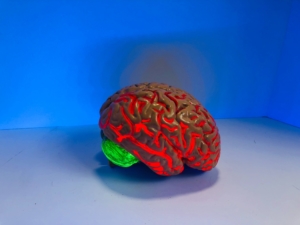 The human brain is an amazing phenomenon. It is capable of so many incredible and complicated things, but it can also be a place of great struggle. Human beings fight battles in their minds daily. They battle cognitive distortions that can greatly impact emotions and behavior.
  Control Fallacies: when someone believes the illusion of being in control of everything in their life (whether internally or externally).
 Cognitive Behavioral Therapy is an evidence-based form of psychotherapy that focuses on thought patterns- what they are, how to evaluate them, and how to replace them with more accurate and helpful thoughts. The goal is for the altered thoughts to then positively affect one’s emotions and behaviors (as stated earlier about the Cognitive Triangle).
 After evaluation, it is necessary to replace. This is how you can literally renew your mind. This is how to train your brain to think differently. For example, instead of allowing yourself to automatically think about getting in a car accident every time you get in your car (which leads to anxiety), you could think something like this, “Well, I do not know anything that will happen in the future. All I know is that right now, I am safe.”
 Lisa began her day by announcing, “Good Morning!” in a groggy, insincere voice. She tossed and turned all night over her father’s unexpected diagnosis, not knowing how to stop worrying about what might happen. Her anxiety builds and sweat beads on her upper lip as she mentally reviews her to-do list.
 The National Institute of Mental Health describes the symptoms of General Anxiety Disorder as:
 Imagine Lisa sipping her chamomile tea before bed as she looks over a Bible verse that she is memorizing. She sets her alarm an hour early so that she can enjoy a healthy breakfast and spend quiet time alone with God.
 Or, Lisa may have another anxiety disorder that can only be diagnosed by a psychiatrist or specialized counselor such as: Post Traumatic Stress Disorder, Social Anxiety Disorder, Panic Disorder, Phobias, or Obsessive Compulsive Disorder.
 A commitment restricts your freedom. Isn’t that the root of your fear? When you keep your options open, you still feel free. But there’s a problem with this kind of freedom. When we always keep our options open, we never get to enjoy the rewards of commitment – a fulfilling marriage, for example, or a rewarding career.
 It’s crucial to listen to your intuition in every relationship, not just romantic ones, but especially before you make a lifetime commitment to someone. A fear of commitment and a sense that something is wrong or unhealthy are two different things.
 Recognize that regret is part of life. None of us have perfect foresight and unrestricted freedom. Every choice we make to do one thing is a choice not to do something else. None of us will choose perfectly. Our realities will always be limited by our own decisions.
 Words can be a funny thing. Over time, their meaning can change and new words come into our vernacular. One word you might be hearing more often is “Enneagram.” For those who don’t know what it is, it might sound like a diagram. Others think it’s a medical tool, like a sonogram. Often people hear it and think it’s something scientific that doesn’t apply to them.
 The exact origins of the Enneagram personality test are a mystery. It’s an ancient method for understanding human personality. This tool has been used by Christians and other religions around the world for centuries.
 It can be far too easy to take a personality test and never think about it again. We take the test everyone on Facebook is taking, think “hm, that’s interesting,” post our results, and never think about it again. Even with a tool this transformative, this still happens. There is an urge to find out our type without exploring it so we feel like we fit in is for all of us.
 It seems to be especially difficult to find one’s type if someone has been through trauma, chronic stress, or other challenging situations recently. In those situations, we often lean towards a different type. It’s not at all uncommon for someone to type themselves then study more or come out a chaotic life situation to realize they were actually a different type.
 We all go through times of feeling overwhelmed or overworked. Maybe you think being constantly stressed is normal. Or, maybe you feel like it’s a completely negative condition to have that sense of emotional stress.
  So, if your body reacts to significant life events with specific responses, how can you know how much stress is too much? If you’re noticing signs of stress, or if you’re going through a long season of chronic stress, what can you do to cope? Coping with difficult experiences or life changes helps us build resiliency, the ability to emotionally navigate and withstand hard circumstances.
 But, if we are exposed to these hormones consistently for long periods of time, we will start to notice negative health effects and signs of stress, such as digestive problems, sleep problems, headaches, flare-ups in chronic conditions, etc. Mental health issues are also common with long-term stress, including depression and anxiety.
 Even if you can’t eliminate the causes of your stress, there is still hope for you. There are resources that can help you live your best life even in the midst of a situation you can’t change. There are measures you can take to care for yourself in the midst of toxic or tragic situations.
 Friendships range from the casual acquaintance or former classmate you bump into or “friend” on social media, to the kinds of friendships where you would entrust your life and the lives of your loved ones into their hands.
 We need the company and connection with other human beings. That’s why one of the worst punishments which can be inflicted upon a person is to place them in solitary confinement.
 These two men pledged friendship to one another, so much so that when Jonathan’s father, King Saul, was hunting down and wanting to kill David out of jealousy, Jonathan went out of his way to warn his friend to keep him safe (1 Samuel 20). Some friends will go way out on a limb for us, much more than even our own siblings or parents. Such friends are precious.
 Whoever we invite into our inmost spaces to become our friends, to have influence in our thinking and behavior, they will have a profound impact on the development of our character. As Paul puts it, “Do not be misled: ‘Bad company corrupts good character’”
  A racing heart, gripping fear or a persistent worry cycle that keeps you up at night are just some of anxiety’s many symptoms. The Collins Dictionary defines anxiety as a feeling of nervousness or worry. Health websites explain that anxiety is your body’s natural response to stress: the approach of a predatory animal would have set off an alarm in early man’s body – a rush of adrenaline triggering a “fight-or-flight” response.
 There are times in life when this command may feel impossible and not calming at all. God says we must stop feeling this way but how do we do that? We could easily end up feeling anxious about our anxiety, striving to be content but still feeling defeated. Reading the verse carefully, we see that the verse gives a better alternative. Instead of feeding fear, we should tell God what we think we need.
 Of all the Bible verses about not worrying, this passage from Matthew is probably read most often. It speaks so directly to the physical needs that cause us concern. In John Piper’s post, “Do not be anxious about your life,” he mentions eight reasons why Jesus says his disciples should not be anxious from this passage.
 If you struggle with anxiety, know that the Bible offers hope. The verses above, along with many others throughout the Scriptures, are good food for meditation and memorization. When anxiety strikes, bring these passages to mind and rest in the calming assurance that God is in control.