
Traits of a Highly Sensitive Child and How to Care for Them
Children often experience big emotions, and it is typically normal. Some children, however, feel they live in a state of extreme emotion all the time and are more easily triggered by their environment. When this happens, you may find yourself wondering if your child’s reactions are normal or if you have a highly sensitive child.
Help! I have a highly sensitive child
A highly sensitive child is a child who processes and reacts more deeply to their experiences than other children do. They are inherently wired like that. Highly sensitive children are often known to be feisty and fierce, passionate and persistent, insightful and empathetic, intuitive and intense, and they are constantly living in extremes. They’re known to be either ecstatic or enraged.
Highly sensitive children are sensitive to their environment, experiences, relationships, and expectations. They are amazing children, but because they react in bigger ways than most, they are prone to frustration, power struggles, and perfectionism. This is because they find it more challenging to adapt to the limits and expectations they encounter in their daily lives.
The intensity of highly sensitive children can be exhausting for their parents or caregivers. It can be hard to understand your highly sensitive child in all their complexity, and they are often misunderstood because there seems to be no middle ground with them. The better you can understand them, the more you can learn how to provide the sensitive and responsive care that they need to thrive.
3 Key Traits of Highly Sensitive Children
Some of the more prominent traits of a highly sensitive child include the following:
Highly sensitive children are more sensitive to the world around them
Highly sensitive children experience their emotions in extremes. This is because they feel much more deeply than most. They are often compared to orchids: high-maintenance plants that react to the smallest changes in environment. They are more vulnerable to changes in their environment and may seem to react irrationally as a result.
In addition to their extreme emotions, they are also sensitive to the environment they are in, and their brains never seem to shut down. They are known as processors as they tend to focus on and analyze even minute details. While this makes them extremely insightful and empathetic, because they seem to lack an internal filter, they are also more easily overwhelmed, absorbing more than they can handle.
They also tend to be more self-aware and perceptive than most. They question things others might take for granted and can articulate their motivations for things they did or said even better than some adults. They can understand their own struggles. They also tend to have great insight into how others feel and can pick up on subtle changes in tone.
Highly sensitive children have big reactions to the world around them
Your highly sensitive child will have bigger reactions than most to sensory input, even to seemingly small things. They are more sensitive to sensory input and experience sights, sounds, textures, and smells more intensely. They may avoid things like foods with particular smells, flavors, or textures, certain kinds of clothing, public restrooms with noisy hand dryers, or get upset when something doesn’t look like they expect.
A highly sensitive child is more prone to meltdowns because they are more quickly triggered to experience stress. When they feel overwhelmed by the constant onslaught of sensations that they can’t manage effectively, it can result in intense emotional reactions.
A highly sensitive child will be more apprehensive about new people or places. Their minds turn over all the details in a new situation, whether it’s a new classroom, activity, birthday party, or family gathering. They will try to anticipate what they might expect, wondering what might happen and whether they will be liked, feel safe, or be good at the activity.
Their deep thinking and constant analysis are an attempt to prepare for the unknown. While this makes them come across as bright and insightful, it can also be overwhelming for them. This results in the child resisting new things and clinging to what is familiar and comfortable. They may struggle separating from their parents or adapting to being left alone at school or sports.
A highly sensitive child also tends to get frustrated more easily. While everyone experiences a certain amount of natural discomfort when confronting something new or challenging, a highly sensitive child will find it intolerable. Because they experience more distress in those situations, they may give up more easily when they experience a challenging task.
 They also tend to be preoccupied with how others see them, even if parents or other adults say complimentary things about them. They are so sensitive to feeling scrutinized or assessed that they even feel uncomfortable receiving praise, as they perceive the pressure of being evaluated.
They may also be inclined to misinterpret others’ actions, taking what others say and do more personally than it was intended. It may seem like a highly sensitive child filters their experiences through a victim mindset. This can make navigating relationships with siblings and peers more challenging.
Highly Sensitive Children try to control the world around them
Because of their sensitivity to their environment, a highly sensitive child will live in a state of high alert and will feel a greater need for control in those situations where they feel uncomfortable. They will try to prepare for and protect themselves from the next big emotion, event, or experience that could be overwhelming.
They will attempt to gain control of a situation by being rigid and inflexible about details like where to sit and which plate to use. The more out of control they feel on the inside, the more controlling they may be on the outside. Even their constant analysis of event details is part of this desire to feel in control of their world and what to expect in any situation.
A highly sensitive child is more likely to struggle with perfectionism because when they can’t complete a task in the way their brain is telling them it should be, they feel a loss of control. They are triggered to feel shame, and this results in them quickly feeling like a failure. They experience failure as a personal failing they are judged for, instead of as part of the learning process.
Perfectionism and difficulty losing go hand in hand. This makes competitive activities especially stressful for the highly sensitive child. A highly sensitive child is more likely to try to manipulate the game in their favor so that they can win to protect themselves from the shame of losing. Alternatively, they may get angry and quit if the result isn’t going their way.
This also means that a highly sensitive child will have a hard time accepting correction. Even seemingly harmless directions can be perceived as personal judgments instead of helpful guidance.
Any perceived shame they experience can trigger reactions like laughing, looking away, anger, or even running away. Evasive responses are all coping mechanisms to provide protection and relief from the flood of difficult emotions.
How to Care for Your Highly Sensitive Child
A child with a sensitive temperament can’t outgrow who they are. They can learn how to manage their emotions and cope with the more challenging aspects of their sensitivity. A big part of helping them is managing your expectations and approaching their meltdowns with patience and compassion.
When your sensitive child reacts to something, don’t take things they say and do personally. The fact that they are lashing out is a sign that they are struggling to cope with something. Don’t minimize their emotions. Instead, try to remain calm and not be reactive yourself. Stay present while providing space for your child to feel what they’re feeling.
Don’t try to problem-solve in the middle of the meltdown, but rather wait until they are calm before offering help. If they permit you to share some ideas that you have of ways to handle a situation, they will feel more in control and be more receptive to what you have to say. Sharing your thoughts, guidance, and personal experiences in this manner can help them better understand and adapt to the world around them.
Not all highly sensitive children will have all of these traits, and many who aren’t highly sensitive may struggle to some degree with some of these. But because of their sensitivity, these children may be more likely to struggle with anxiety or mental health challenges. If this sensitivity is affecting their ability to function well at home or at school, or interfering with their relationships, they can benefit from professional help such as Christian counseling.
Connect with a counselor near you or through this website to learn more about working with myself.
Photo:
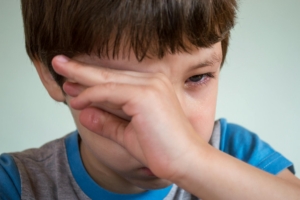
“Crying Boy”, Courtesy of Vika Glitter, Pexels.com, CC0 License
 Chasing endless perfection
 Unfortunately, both terms (narcissism and codependency) have undergone a platform mutation in recent years to their detriment because of social media, public overuse, and misunderstanding. Narcissism itself isn’t evil or all bad. It often stems from poor self-esteem and exemplifies someone who is hurting.
 Unlike narcissism, codependency is not a disorder recognized by the DSM-5. It’s a behavioral pattern that was first used in the 1970s, made more universal in the 1980s when a book, Codependent No More by Melody Beattie was used to help those struggling with substance use disorder (SUD). Typically, a person with codependent behavioral patterns will often mask the consequences of another person’s behavior.
 On the surface, it appears that codependent people struggle with low self-esteem and, therefore, may not assert themselves or their own opinions. This is not an accurate portrayal of a codependent-tending person. Just as a narcissistic person does not always think of themselves as better than others or isn’t always toxic and full of drama. However, the two can share similar roots.
 One of the downsides of the public using terms that are clinical in nature – such as toxic, narcissistic, or codependent – is that they can take on inaccurate meanings. A good way to respond if you think you or your friend exhibits some traits of codependency or narcissism is to be curious, gentle, and compassionate.
 Handling grief and loss Older couples have experienced more grief and loss of family and friends. This can have an impact on how they see their future. Counseling can help them realign their focus on staying together and enjoying life as older adults.
 Blending in like a wallflower might work for some, but this can only set you up for future stress and anxiety in a professional setting. You must learn how to communicate any problems or concerns. Voicing your ideas can help you grow in your career and your confidence.
 These symptoms can continue and increase throughout a person’s life. They can range from small to large, come and go depending on the situation, and vary in intensity from mild to severe.
 Sadly, these unhelpful messages are common among people who are shy and among people who have SAD. It’s essential to know that your fears, which contribute to both shyness and social anxiety disorder, stem from real emotions that need to be taken seriously and dealt with gently.
 A standard CBT method for social anxiety disorder may help the person understand that some of his or her perceived judgments aren’t there. It can help him or her focus less on self and more on the genuine good found in others. CBT helps people learn new behaviors and beliefs, which impact how they view themselves and how they perceive others’ views of themselves.
 Encourage second If your loved one expresses a desire to overcome their fears, start with understanding. There aren’t any quick and easy ways to wholeness when it comes to mental health disorders.
 Legal and other consequences Anger can lead to bad decision-making, like assaulting other people or damaging property. This can result in legal action being taken against you, as well as being arrested and possibly convicted. Anger can also lead to financial problems, especially when the anger escalates and results in losing work or facing lawsuits for damage caused to people and property out of anger.
 Psychology has come a long way with treatments for social anxiety. Cognitive Behavioral Therapy (CBT) and Exposure Therapy are two of the most well-known and effective forms of therapy.
 As you progress through treatment, the stops will become longer and contain more people. After every exercise, you will report your progress to the counselor and discuss what occurred, how you felt, and what thoughts went through your mind. If an outing did not work out as planned, you will discuss what could have gone better and regroup to try again.
 Positive affirmations are phrases that help to encourage and empower. The more you say these daily affirmations, the more you will believe them to be true. When you believe something, whether true or false, it becomes true for you.
 You can develop social anxiety disorder later in life, especially if you have experienced trauma. According to the World Health Organization (WHO), the pandemic increased the prevalence of anxiety and depression by 25%. Many people still struggle with anxiety and social anxiety that began in 2020.
 Time is an important aspect of our lives. Spouses might want alone time to pursue their hobbies, and also time for shared activities. To promote a healthy work-life balance, a couple may need to establish boundaries between work and life, for instance, by not checking work emails after 5 pm.
 The term ‘codependency’ is one that’s gained currency in the last decade or so. It describes a variety of unhealthy relationship behaviors that can be caused in several ways. However, at the heart of codependency is an underdeveloped or poor sense of self. If a person doesn’t develop a clear sense of who they are, their values, and their boundaries, they are more prone to developing codependent patterns of behavior in relationships with others.
 There isn’t a single and straightforward path toward codependency. A person develops a poor sense of self and has difficulty maintaining healthy boundaries with others for a variety of reasons. The process of developing a healthy sense of self was often disrupted by experiences such as childhood trauma or experiences such as abandonment, or neglect. These can be in the form of a parent dying, parental divorce, or being literally abandoned.
 Depending on your situation, societal or cultural expectations can also play a role in nurturing codependency. If, for instance, there’s more of an emphasis on the collective – society, your local community, or the family – over the individual, that may lead to codependent behaviors. While it’s important to look out for others and love them well, it can be detrimental to do so without regard to personal well-being.
 A friendship, even a good friendship, can be overcome by codependent dynamics. If a friend is in trouble and you bail them out, that’s one thing. However, if you begin to fall into that pattern of relating to each other, a codependent dynamic can develop. A healthy friendship can become codependent in several ways, or it might commence between two people with codependent tendencies and patterns of behavior. Recovery, however, is possible.