
5 Tips for Life After Divorce
There is a saying that “you never step into the same river twice.” Transitions and movement are a part of life – we change, or our circumstances change, or we find both changed in ways that are irrevocable, and sometimes painful. One of life’s changes is when you get divorced, a reality that has been in decline in the last few years in the US, but still affects thousands of people every year.
Getting married is usually attended with joy at the transition into life with someone and getting divorced separates you from the person with whom you shared life and dreams for that life together.
How to Navigate Life After Divorce
The situations in each marriage are different, and so divorce can bring with it a broad mix of emotional responses, from anger, relief, confusion, grief, or a combination of these. Life after divorce is about navigating a new reality with its own complexities that others may struggle to relate to. How do you move into life after divorce in a way that allows you to flourish? Newport Beach Christian Counseling offers compassionate, faith-based support to help you process your emotions, heal, and step into a hopeful future.
Grieving loss
 One aspect of life after divorce for some is that it is a time of grieving loss. Even in the most difficult marriages where their end comes as a relief, there is still a sense of loss. Sharing a life with someone isn’t an easy thing; you form emotional, physical, and other ties to one another, and that includes whatever hopes and dreams you shared with the person you married.
When you get divorced, all of what could have been, all that you’d hoped for and desired from a shared life must be laid to rest. The relationship changes in profound ways, and that’s something you must come to terms with, whether you’re happy, feeling regret, or lost because of what’s happened. Grieving is about giving yourself the room you need to feel your feelings, whatever they may be, and not gloss them over or pretend they aren’t there.
One avenue for this important work is through therapy. Group and individual therapy might be helpful as a part of your process of coming to terms with what’s happened and addressing issues in your soul.
The work of regaining your sense of self can happen in a therapy setting where you have the support and understanding of others. And if you need to heal, take time out for that to happen. The point behind grieving is not to wallow in self-pity but to acknowledge that in getting divorced, something profound has happened in your life, and you need to come to terms with the full scope of it.
Practice self-care
 Being able to take care of yourself is important no matter what stage of life or experiences you’ve gone through. Divorce is one of the most stressful things a person will ever experience. Stress has many negative impacts on one’s health, and that includes comprising the immune system, something that many studies have shown.
Going through a divorce and dealing with the aftermath of it can have a significant impact on your overall health, which heightens the need for practicing self-care. There are several ways to deal with stress and make sure that you’re staying healthy.
Get some sleep. Good sleep allows the body to recover from whatever wear and tear it has experienced during the day. Not only does it help with energy, creativity, and emotional intelligence, but sleeping well also helps with what you eat.
Poor sleep has been linked to the consumption of foods that aren’t good for you because they are too refined, are high in sugar and the fats your body could use less of. You make better eating choices when you sleep well, and when you eat well it also impacts your sleep positively.
Eat well. As pointed out above, eating well by eating foods that help with your digestion, boost your immunity, and improve brain health not only keeps you physically and mentally healthy, but it aids good sleep and the emotional benefits from that. So, eating good fiber, taking in nuts, citrus, fresh vegetables, oily fish, and other sources of omega-3 fatty acids all help to boost your health.
 Move. Whether you’re a runner, swimmer, cyclist, dancer, or walker, do whatever you enjoy doing that gets you moving and that has your physician’s backing. Not only does exercise reduce stress, but it keeps your body healthy, and your mood elevated.
Deal with the negative self-talk. In some situations, there may be negative talk from the people around you about your divorce, but also from yourself. You may be blaming yourself, calling yourself names, or feeling unworthy of love. Practicing self-acceptance and speaking gently with yourself are effective ways to counter this negative self-talk that only serves to paralyze and disempower you.
Lean on your circle
At all times, community matters. Life after divorce is no different, even if your community might shift a little during and after the process. Divorce may cause your circles to change – people can take sides about your divorce, and friends can be lost in the process.
However, you need your people – whoever they may be – in your life after divorce. This may be to help with chores that your partner used to do or to take the kids when you can’t, or just to come alongside you in support.
As mentioned before, group therapy can function as a supportive community to help bear some of the load of a new situation. Your spiritual community, as a community of people also on the way, may also be a bastion of support. Instead of shying away from the community, drawing nearer towards others who are safe is vital for emotional and mental health.
Dealing with the new you
Life after divorce doesn’t stop, and neither does your growth as an individual. God has built us in such a way that even the devastating events in our lives aren’t the end of us, and the evil that comes upon us can be used for good by God (Genesis 50:20; Romans 8:28), though it’s hard to tell at the moment how pain can birth anything good.
 Part of life after divorce is to deal with the new you and come to terms with the changes your new status brings. Being married shifts not only our self-understanding but how other people relate to us. Getting divorced can have the same impact, and that sense of who we are and how people treat us can shift because of the new status.
Where you may have gotten used to going certain places because of and/or with your spouse, including the people you mingled with, you now must figure out doing life without them. The things you liked, and indeed the entire trajectory of your life may have changed because of your contact with your ex, and rediscovering who you are again away from that relationship becomes a whole new adventure. Take your time in figuring out what comes next for you.
Continue living your life
Divorce is not the end of your life, but a new chapter in it. If you have children with your ex, continue being present for them. They need to be reassured and know that their parents love them and that, though things have changed for the adults in the room, how they are loved hasn’t. Newport Beach Christian Counseling provides guidance and support to help you navigate this transition with grace, ensuring both you and your children find healing and stability.
Whatever may have happened between you and your ex, being present for your kids is important, as is protecting them from whatever issues you may have with your ex. They don’t need to be read in on the messier points of the relationship, used as spies to find out what your ex is doing or as messengers to communicate with your ex.
Go to work, keep enjoying your relationship with God, your hobbies, your church community, your friends, and continue developing yourself as a person. Though you may not be ready for love again just yet, it’s a possibility that may lie ahead in your future, and something that you can remain open to.
“Broken Heart”, Courtesy of Kelly Sikkema, Unsplash.com, CC0 License; “Pensive”, Courtesy of [ik] @invadingkingdom, Unsplash.com, CC0 License; “Lego Lady”, Courtesy of Jackson Simmer, Unsplash.com, CC0 License; “Barrier”, Courtesy of Eric Ward, Unsplash.com, CC0 License
 There are three C’s that we will be covering today: Compatibility, Compromising, and the most powerful one, Complimentary. These three stages of relationship maturity can help put some perspective to see where you are at in your marriage to see what is next for us to move on.
 By now I’m sure you see that these issues can slowly begin to turn a marriage into a rusty and withered relationship. How can compatibility save your marriage? This can save your marriage because you can talk to your spouse about how both of you had a great start but how you need to move forward. The start needs to be celebrated. Reflect on the enjoyable times you had together which will help you both to bond again.
 A positive tone will help a lot with communication because it can win someone over. The main issue with the stage of compromise is that it can take you far but not all the way. It’s great to compromise however, one spouse may get burned out if they don’t have the constant refreshment.
 Think about that vision for a moment. Both spouses work together to help elevate each other. What kind of marriage do you think they’ll have? It won’t be just a surviving marriage; it will be a thriving marriage! This is the secret to saving your marriage. Both of you must sit down, most likely with another couple, and process this vision to help both learn to inspire each other. This cannot be done alone. Both partners must work together so both of you can prosper.
 It is better to have important and life-shaping conversations before you vow to spend your lives together. These conversations can help you discover any red flags or draw you closer to one another as you prepare to spend your lives together, for richer and poorer, in sickness and in health.
  It is important to talk through commitment and what it means to each of you. Once you walk down the aisle and vow to spend your lives together, does that mean through thick and thin? Does that mean you vow to keep working even when you feel disconnected and distant from one another? What does that mean when one of you gets a job offer in a different place? Take time to talk through marriage commitment and why you were drawn to your significant other.
 Some couples wait until years into their marriage to talk about their hopes and dreams for a family. To avoid miscommunication in the future, it is helpful to just talk through what you pray for someday. Do you hope to have children? Are you wanting a big family or a small family?
 We delight to connect with others, to know and be known and loved by others. In our relationships, we make ourselves vulnerable, build networks of mutual dependence, and build parts of our lives based on those relationships.
  Part of trying to address a broken relationship is to understand why it broke down in the first place and to do the challenging work that may be needed to change. It may be that in trying to understand what happened, you may uncover a misunderstanding and that gets things back on track.
 In other words, it can get complicated, but being willing to examine ourselves and apologize may be a necessary precursor to reestablishing the relationship. This doesn’t mean backtracking and dismissing what was said but acknowledging the pain that may have been caused or boundaries traversed.
 When a relationship is broken, both parties may agree that things went wrong, and that the situation needs to be resolved. When things go awry in a relationship, the sense of trust and vulnerability may be broken, and you become a bit more wary of one another. A relationship, even one that the people in it are willing to work at, doesn’t just snap back to what it was before the issue arose.
 When God created us, we were fashioned in God’s image: “So God created man in his own image, in the image of God he created him; male and female he created them” (Genesis 1:27). God, who is eternally Father, Son, and Holy Spirit, is deeply and inextricably relational.
 Reflecting on marriage while writing to the Christians in Ephesus, the apostle Paul recalls what was said in Genesis 2 and reminds them that when two people get married, something monumental takes place – the two become one flesh. But then he drops the bombshell that human marriage is an echo of the relationship that Jesus has with his people. This is a “profound mystery”, he writes (Ephesians 5:32).
 This was written before the advent of the electric blanket, but the point is well-taken. Having someone to share life and a bed with is pleasant. Many married couples can attest to the joy of having someone to pre-warm the bed and snuggle up to, and how the input of their partner has helped them to make a better life and business decisions.
 The birth of children can change our priorities; the loss of a job can drastically change how you perceive yourself; meeting new people or reading new books can shift our views on politics or other areas of life. In all this, rather than growing apart, a couple can share in one another’s journey so they grow together.
 Marriage is the joining of two people into one flesh. “For this reason, a man will leave his father and mother and be united to his wife, and they will become one flesh” (Genesis 2:24). This union is something that Paul called a “profound mystery” (Ephesians 5:32).
 Presumably, husbands being told to love their wives is something that needed to be said a few times. Loving your spouse means listening to them (really listening), being considerate of their needs, not keeping records of wrong, not being rude or self-seeking, seeking to protect and trust your spouse (1 Corinthians 13).
 Another passage warns “Can a man scoop fire into his lap without his clothes being burned? Can a man walk on hot coals without his feet being scorched? So is he who sleeps with another man’s wife” (Proverbs 6:27-29). Entering an intimate relationship with someone other than your wife can lead to tremendous pain for everyone involved; as alluring as it may seem, it’s just not worth it.
 Some friends. Are. The. Worst. They don’t encourage right behavior and instead enable their friend’s worst impulses. “Do not be misled,” Paul tells a young church, “Bad company corrupts good character” (1 Corinthians 15:33). Some friends won’t caution you when you’re going astray, nor will they invest in your marriage by encouraging you to be a better husband.
 The honeymoon period might mean constant togetherness, a high of physical intimacy, and make you wonder if your spouse could ever do wrong in your eyes. There might be a literal hormonal spike as you get married and experience the wedded bliss of waking up to the love of your life, spending every night together, and getting to be with them in the mundane moments.
 You vowed to love one another through sickness and in health. For richer or for poorer. For better and for worse. You vowed to love one another when you wake up with morning breath, when one of you does not replenish the toilet paper in the bathroom, when you disagree over which side of the family you should visit at Christmas, and how to handle the order of priority in your finances. Marriage is working through disagreements, not running at the first sight of them.
 Once the honeymoon period comes to a halt, raw and vulnerable conversations need to be at the forefront of your marriage. To continue thriving in your relationship, you cannot stay dormant. You must keep looking forward, even when you are unsure of what forward looks like.
 If you want your marriage to thrive, the secret ingredient is not how lavish your lifestyle is or whether he brings you fresh flowers every week. Marriage should be centered on a relationship with Christ, focusing on the qualities of Christ.
 The Guy Ritchie-directed movie Snatch, starring Brad Pitt and Jason Statham among others, put an interesting definition of the word “nemesis” in the mouth of one of its foul-mouthed characters, a gangster named Bricktop. Bricktop, in one of his many memorable pieces of dialogue, said something like this: “Do you know what nemesis means? A righteous infliction of retribution manifested by an appropriate agent. Personified in this case by . . . me.”
 In our own lives, we make many, many mistakes. We are repeat offenders in God’s books, and we find ourselves often at the throne of grace asking God for forgiveness. In the prayer he taught his followers, Jesus taught them to ask God for forgiveness even as they pray for daily bread (Matthew 6:9-15).
 Forgiveness is connected to massive health benefits. Johns Hopkins Medicine notes that “Studies have found that the act of forgiveness can reap huge rewards for your health, lowering the risk of a heart attack; improving cholesterol levels and sleep; and reducing pain, blood pressure, and levels of anxiety, depression, and stress. And research points to an increase in the forgiveness-health connection as you age.”
 robs you of your joy. Have you ever noticed what happens when you’re in a good mood, and a person you have something against walks in the room?
 God has not left us alone in this. The Bible gives us wisdom on how to navigate this important area of life, challenging and encouraging us to enter and conduct relationships in a healthy manner. Below are a few key verses with wisdom on handling and thinking about relationships in a life-giving way.
 knows God. Whoever does not love does not know God, because God is love… If anyone says, “I love God,” yet hates his brother, he is a liar. For anyone who does not love his brother, whom he has seen, cannot love God, whom he has not seen.” (1 John 4:7-8, 20).
 The earlier verse mentioned getting rid of anger. Anger is a real issue for many. While anger is a valid emotional reaction to circumstances or certain actions by people, it can become crippling if we live in it. Anger can fester and take root so deep that even being in the same room with the person becomes impossible.
 God has placed us in many different communities, including the community of faith. To live out the Christian life, we need that community. The reciprocal pronoun “one another” is prominent in the New Testament: “Live in harmony with one another” (Romans 12:16); “Be servants of one another’ (Galatians 5:13); “Comfort one another” (1 Thess. 5:11); “Submit to one another” (Eph. 5:21); “Forgive one another” (Col. 3:13); “Confess your sins to one another” (James 5:16); “Love one another from the heart” (1 Pet. 1:22) and so many more.
 Adam and Eve had one another in this brave new world – someone who was an equal but different and complementary. Since people are made in God’s image, it makes sense that Adam and Eve had an innate desire for relationship and that it wouldn’t be good for either of them to be alone. As descendants of Adam and Eve, all of us are the result of this first marriage.
 Of all the things one could say about marriage, one apt description is that it is a mystery. It’s a mystery in a least two ways. First, despite our culture’s fractious relationship with marriage, the vast majority of people are still drawn towards making the public and lifelong commitment that is marriage.
 In other words, if you want to get married, that’s great, but marriage comes with certain responsibilities or anxieties, and you must be aware of that. If you want to stay single, that’s also great. The single life enables a certain kind of unbroken focus on the kingdom. In other words, the calling toward either marriage or singleness is morally neutral; each life comes with its own joys and burdens.
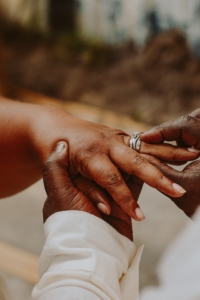 It also addresses the harmful attitudes of others who are not in the marriage and who don’t take the marriage covenant seriously. The letter to the Hebrews says, “Marriage should be honored by all, and the marriage bed kept pure, for God will judge the adulterer and the sexually immoral” (Hebrews 13:4).