
How Regular Sabbath Improves Your Mental and Physical Health
🎧 Listen to this article
Many Christians have heard about the Sabbath and know it should be part of their life, but it can be hard to make it happen. Between the busyness of daily life, work, family, and even church activities, fitting in regular times for rest can feel impossible. Additionally, it can be hard to understand why it’s so important to begin with. Newport Beach Christian Counseling can provide support in helping you understand the significance of rest and how to incorporate the Sabbath into your life in a way that nurtures your spiritual and mental well-being.
People are often taught that getting things done is better than rest. After all, your family needs you, you must work, and there are so many things on the calendar. Plus, the laundry is piling up and someone needs to get to the grocery store. How will taking a rest help you feel better when there is so much to get done?
What is the Sabbath?
Let’s start by growing a deeper understanding of the Sabbath. The concept of the Sabbath is woven into the creation of the world. When God created the world, he spent time making day and night, land, sea, air, plants, animals, and even people. When he was done creating those things, He did something different.
Thus the heavens and the earth were completed in all their vast array. By the seventh day God had finished the work he had been doing; so on the seventh day, he rested from all his work. Then God blessed the seventh day and made it holy, because on it he rested from all the work of creating that he had done. – Genesis 2:1-3, NIV
 This is the first reference to rest. But this is more than taking a break. Genesis 2:3 describes this rest as something special, something God blessed and made holy. It is this key element that defines Sabbath in our lives.
As you continue to explore the Word, you see God talk about the Sabbath as a holy time of rest. This is more than just stopping work, although that is part of it. It is that blessed time that is holy and set apart. It is about intentionally making time to rest from work to worship God. Later in the Word, the idea of the Sabbath is explored in many ways.
In the Old Testament, the Sabbath is part of the law that people must follow. Later, when Jesus comes and is resurrected, we learn that we are free from the law outlined in the Old Testament. Jesus fulfills the law for us. That can leave us wondering about the Sabbath and its role in our lives.
Should the Sabbath be part of my life?
Practicing Sabbath is good for you. It isn’t about following an archaic rule to please God. Instead, you can incorporate Sabbath into your life to benefit you spiritually, physically, and mentally.
 While there are different opinions on what Sabbath looks like, how people should practice it, and when it should be observed, you can discover the benefits of the Sabbath in your life no matter how you do it. It is less about following strict guidelines and more about developing a rhythm of rest and worship that feeds your soul.
It is often easy to understand the spiritual benefits of taking time to rest and worship God. However, there are additional benefits to consider.
Sabbath rest improves your mental health.
Taking time to rest and connect with God goes beyond feeling like you had a break. There are deeper mental health benefits that people can experience from routinely making time for Sabbath in their lives.
A study of a small group of people at Liberty University investigated how an eight-week Sabbath routine impacted anxiety, worry, and stress. Most participants, upon completion of the study, showed a decrease in anxiety, worry, and stress in their lives. When you consider the benefits specifically connected to rest, there are a variety of things that help improve mental health.
The National Alliance on Mental Illness describes benefits such as increased energy, which allows you to do more of the things you enjoy. Similarly, people who take time to rest can experience more energy to devote to the people they love and the work that is important to them. These things all work together to improve mental well-being.
 As you look at the spiritual aspects of the Sabbath, such as prayer and corporate worship, the mental health benefits are also evident.
Kristen Rogers of CNN reported, “A 2011 study found prayer can help reduce anger and aggression. In a series of experiments in which participants either prayed for or thought about a stranger, a person who angered them, or a friend in need, members of the prayer group were more likely to feel less anger and aggression after a provocation.”
When you look further at the mental health benefits of taking spiritual rest, you discover that things like prayer can reduce feelings of anxiety, isolation, and fear while increasing feelings of gratitude and connection. Combining the benefits of rest and spiritual dwelling that occurs during a regular time of Sabbath rest, promotes mental health benefits that go beyond the Sabbath.
Physical benefits
Looking at Sabbath as the marriage of physical rest and worship of God allows us to see how both aspects benefit us in more spiritual and mental health. Each of these aspects has physical benefits as well.
Taking time to rest has obvious benefits for your body. According to Integris Health, “Rest is vital for better mental health, increased concentration and memory, a healthier immune system, reduced stress, improved mood, and even a better metabolism.”
Regular rest has concrete physical benefits such as:
- Decreased blood pressure.
- Chronic pain relief.
- Improved immune health.
- Stronger cardiovascular system.
If you consider the spiritual element of the Sabbath, you can also see amazing physical benefits. Corporate worship, private time with God, and regular prayer as suggested by the concept of the Sabbath can improve everything from hormone levels to breathing.
Some examples of how prayer can benefit your physical health are:
- Faster recovery following medical procedures.
- Helps your body heal more efficiently.
- Inhibits the release of cortisol and other hormones that can negatively affect the body.
- Regulates heart rate and breathing.
- Relieves stress and offers hope which promotes physical wellness.
These things all work together to offer better physical health when you routinely practice Sabbath in your life.
Final thoughts

As you consider the challenges associated with incorporating the Sabbath into your life, it is important to also consider the vast benefits. Naturally, the physical benefits are noteworthy. As you combine physical rest and spiritual dwelling with God regularly, Sabbath rest offers you an opportunity for better health and wellness mentally and physically as well.
It is interesting, however, to see that these benefits go even deeper. Whenever you follow God’s commands you will experience spiritual benefits. Sabbath does not need to be looked at as a spiritual law. Instead, you can consider Sabbath to be a helpful directive God offers for your life.
The Bible Project says, “As followers of Jesus, God does not expect us to live by Israel’s laws. However, the wisdom of these laws remains, and the law of the Sabbath is rich with significance for us today. The Sabbath is not a commandment we are bound to; it’s a promise we’re invited to enjoy.”
As you think about how Sabbath may look in your life, consider all the benefits it brings. Sabbath offers you spiritual, mental, and physical benefits that will directly impact your life and well-being.
Does the idea of taking time for a regular Sabbath feel impossible? One of the counselors in our office at Newport Beach Christian Counseling can help you find ways to implement Sabbath in your life so you can have better mental and physical health. Call our office to set up an appointment and get started.
Sources:https://digitalcommons.liberty.edu/cgi/viewcontent.cgi?article=4623&context=doctoral
https://Bibleproject.com/blog/keeping-the-sabbath-is-it-still-relevant-to-christians-today/
“Open Bible”, Courtesy of Jessica Delp, Unsplash.com, CC0 License; “Open Bible”, Courtesy of Jessica Delp, Unsplash.com, CC0 License; Courtesy of Nathan Dumlao, Unsplash.com, CC0 License; “Open Bible”, Courtesy of Jessica Delp, Unsplash.com, CC0 License
 But for many, the understanding of self-care doesn’t go too much further than taking time for yourself, whether by going out for a cup of coffee alone, meeting up with friends, or being available for a long luxurious soak in the bathtub.
 responsibilities, and a healthy diet, rest, and movement all contribute to our general good health and wellbeing. Exercise is also known to help counteract feelings of stress by producing endorphins, so it has a double benefit.
 If your faith is important to you then you will not find fulfillment in just going through the worldly motions but will need to seek a relationship with God by reading His living Word daily, praying without ceasing, and following His commandments.
 If we are familiar with what the Bible says about living a life that is rooted in love for God and neighbor, then we know how challenging living such a life can be. We don’t always meet our self-expectations, and that’s to say nothing of the high standard to which God holds his people.

 Peter, one of Jesus’ closest disciples once asked Jesus the question “Lord, how many times shall I forgive my brother when he sins against me? Up to seven times?” Jesus responded, “I tell you, not seven times, but seventy times seven.” (Matthew 18:21-22). Peter’s question is all too relatable. It would be nice to have an upper limit when it comes to forgiveness, beyond which we can hold onto our resentment with divine approval. Jesus scuppers that hope. We forgive as often as we must.
 This is where I like to implement distractions. I may know in my mind that there is nothing to be sad about. I may have a wonderful life, a great spouse, successful children who are walking with the Lord, but I still don’t feel good, and I lack the desire to participate in things I once found interesting. The enemy tries to discourage a person and pressure them to feel guilty about these feelings. Naturally, we tend to look inward for the reason.
 Another reason we may continue to be affected by feelings of sadness is that we may have conditioned ourselves to be in this state. People find it comfortable to sit in darkness, wallowing in self-defeating thoughts. Though it’s not necessarily a desire to feel depressed, we may experience a physiological response (physical response throughout the body) to a depressed mood.
 Do not mistake this for condemnation, however. Christ sent his Holy Spirit to us to encourage us and to convict us of sin. Conviction is meant to prompt us to repent, not to condemn us. The Bible says that His goodness leads us to repentance (Romans 2:4). Out of love, we turn back to Christ knowing that his plans for our lives are far better than our own.
 It may keep us clinging to Jesus, running back to Him for continual support because we realize that during periods of intense depression, He is the only way we can make it through the day. Ultimately, Jesus wants us to be close to Him. He wants us to spend time in His word and rely on Him.
 There are several different types of communication, but they all boil down to verbal, nonverbal (actions), written, and visual. These skills also referred to as people skills, can take you far.
 Some people learn better when several of these types of communication are combined. For example, you might be more comfortable learning new information using written and visual materials. And it might be easier for you to express your thoughts of very detailed, personal matters through written material (a journal) rather than talking (verbal communication) with someone.
 The written word surrounds us daily with billboards, newspapers, chat messages, text messages, and emails. How many emails and texts do you send daily? It is important to improve your writing skills, so you convey the correct meaning and induce the appropriate response.
 Children with Social Communication Disorder may also have another mental health condition that requires therapy. Speak with your child’s pediatrician about adding the professional services of a speech-language pathologist, either at school or home. Some states provide programs, such as “Birth to 3,” to help babies and toddlers to overcome speech disorders and delays.
 The Guy Ritchie-directed movie Snatch, starring Brad Pitt and Jason Statham among others, put an interesting definition of the word “nemesis” in the mouth of one of its foul-mouthed characters, a gangster named Bricktop. Bricktop, in one of his many memorable pieces of dialogue, said something like this: “Do you know what nemesis means? A righteous infliction of retribution manifested by an appropriate agent. Personified in this case by . . . me.”
 In our own lives, we make many, many mistakes. We are repeat offenders in God’s books, and we find ourselves often at the throne of grace asking God for forgiveness. In the prayer he taught his followers, Jesus taught them to ask God for forgiveness even as they pray for daily bread (Matthew 6:9-15).
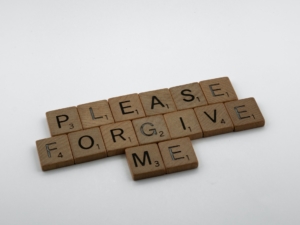 Forgiveness is connected to massive health benefits. Johns Hopkins Medicine notes that “Studies have found that the act of forgiveness can reap huge rewards for your health, lowering the risk of a heart attack; improving cholesterol levels and sleep; and reducing pain, blood pressure, and levels of anxiety, depression, and stress. And research points to an increase in the forgiveness-health connection as you age.”
 robs you of your joy. Have you ever noticed what happens when you’re in a good mood, and a person you have something against walks in the room?
 Adam and Eve had one another in this brave new world – someone who was an equal but different and complementary. Since people are made in God’s image, it makes sense that Adam and Eve had an innate desire for relationship and that it wouldn’t be good for either of them to be alone. As descendants of Adam and Eve, all of us are the result of this first marriage.
 Of all the things one could say about marriage, one apt description is that it is a mystery. It’s a mystery in a least two ways. First, despite our culture’s fractious relationship with marriage, the vast majority of people are still drawn towards making the public and lifelong commitment that is marriage.
 In other words, if you want to get married, that’s great, but marriage comes with certain responsibilities or anxieties, and you must be aware of that. If you want to stay single, that’s also great. The single life enables a certain kind of unbroken focus on the kingdom. In other words, the calling toward either marriage or singleness is morally neutral; each life comes with its own joys and burdens.
 It also addresses the harmful attitudes of others who are not in the marriage and who don’t take the marriage covenant seriously. The letter to the Hebrews says, “Marriage should be honored by all, and the marriage bed kept pure, for God will judge the adulterer and the sexually immoral” (Hebrews 13:4).
 Underlying medical conditions (such as thyroid or hormonal issues), use or abuse of prescription medication or other substances (alcohol, marijuana, etc.), a lack of adequate nutrition (eating too much sugar or processed foods) or physical activity, and any pre-existing addictions may contribute to the development of depression.
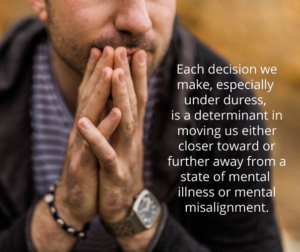
 Problematic patterns of intrapersonal relating (the way we relate to ourselves generally as well as how we respond when disappointed, hurt, or rejected) tend to be overlooked and/or misunderstood in terms of their contribution to the development of depression and other mood disorders.
 Forgiveness is a major theme in the Bible, if not the theme. It is a part of the whole narrative of scripture, describing the process of the fall of man in sin and God’s forgiveness of sin through the life, death, and resurrection of Jesus.
 “A process that allows you to untangle the relationship among your thoughts, your actions, and the responses of your body. As you’ll see, forgiving people for what they did doesn’t mean forgetting what they did. It also doesn’t mean accepting it, excusing it, defending it, or being neutral about their nasty actions. It doesn’t mean becoming passive and taking no action to make things better. Rather, forgiving requires developing a better understanding of the actions of others and taking steps to improve your family life, work life, and overall happiness. Forgiveness means letting go of the anger.”
 Step 1: Uncover anger
 Offer forgiveness to them, even if (when) they do not deserve it. It could be as simple as stating, “I am choosing to forgive you.” This is an act of grace and mercy toward another. It demonstrates to them that you are letting it go, and it gives them a picture of the way Christ forgives them, too.
 Words can be a funny thing. Over time, their meaning can change and new words come into our vernacular. One word you might be hearing more often is “Enneagram.” For those who don’t know what it is, it might sound like a diagram. Others think it’s a medical tool, like a sonogram. Often people hear it and think it’s something scientific that doesn’t apply to them.
 The exact origins of the Enneagram personality test are a mystery. It’s an ancient method for understanding human personality. This tool has been used by Christians and other religions around the world for centuries.
 It can be far too easy to take a personality test and never think about it again. We take the test everyone on Facebook is taking, think “hm, that’s interesting,” post our results, and never think about it again. Even with a tool this transformative, this still happens. There is an urge to find out our type without exploring it so we feel like we fit in is for all of us.
 It seems to be especially difficult to find one’s type if someone has been through trauma, chronic stress, or other challenging situations recently. In those situations, we often lean towards a different type. It’s not at all uncommon for someone to type themselves then study more or come out a chaotic life situation to realize they were actually a different type.